Lions, led by donkeys
Part Two of getting blown the fuck up.

This is the second part of a story that will take multiple instalments to tell, the first piece is here.
So, yeah, we had received solid intelligence that our medical stabilization point was going to be hit by a Shahed that night, and within five minutes, I had all my gear packed up and shifted from the interior of the house we were operating out of to the entry room where we kept our boots. I then finished suiting up for the weather, this was mid-February, and it remained bitterly cold, with a layer of ice over the snow, and another layer of ice and compact snow against the frozen ground. We had passed the point where the ground being frozen was a good thing, because the snow was so deep on the eastern front that taking the farm roads was now mostly out of the question, unless you happened to know of a particular stretch of it that was passable, but that was rare, and still a gamble, because the weather was variable, with it sometimes warming up enough to melt some of the nastiness, but that in turn led to large pond like areas forming, that sometimes had deep mud as their bottoms. As my C.O liked to say, Ukraine has three seasons; dust, mud, and snow/ice. It’d take me another fifteen minutes to hike through the snow and ice to where the armored ambulance was half hidden in a copse of trees and tall bushes nearby, get the snow and ice chiseled off of the windshield and rear doors, and get the truck repositioned back around in front of the stabilization point to for us to load our personal gear into it and be on our way. Shaheds mostly come at night. Mostly. And we had gotten the warning in the early afternoon, and the intel suggested we’d be hit during the night, but still, we were nervous to get out of there as fast as we could. No sense in dallying when we’d been told we were a target. So, the entire time I am making my way to the ambulance, getting it minimally ready to move, and loading into it, I have one ear cocked to the sky, listening for the telltale sound of a Shahed. More so than usual anyway. At this point it had long been second nature to not tune out chainsaws or motorcycles or other such noises one can often in hear in the distance, because many types of drones sound something like this depending on how near they are.
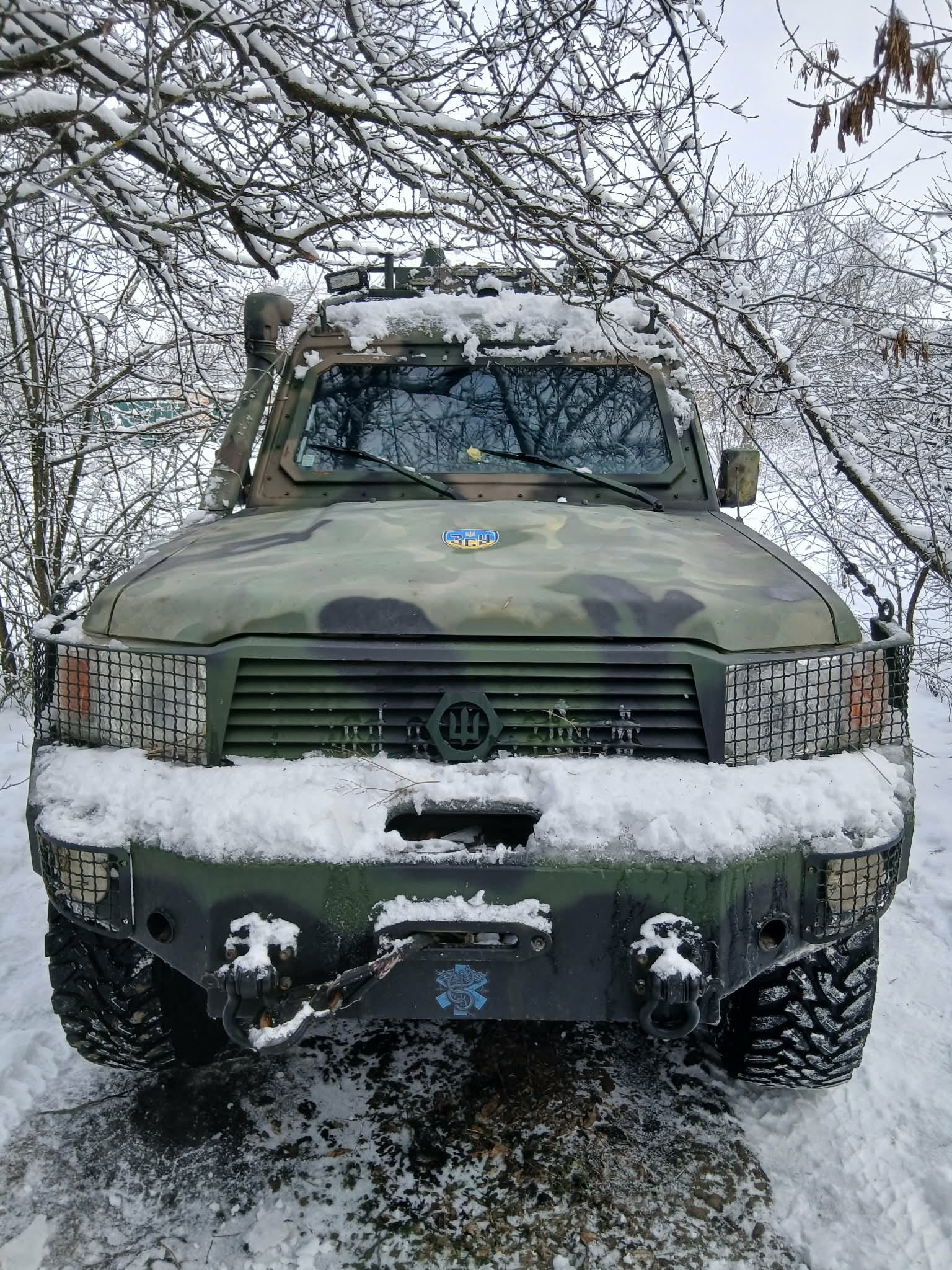
It would take too long to pack up our all medical gear, and after filling our ambulance with my medic, my doc, and all three of ours personal gear we wouldn’t have much room to portage anything else, and had nowhere to take it all to anyway, as we were just displacing ourselves a short distance away to where some of the border guards we were attached to were billeted in another house to spend the night. Although seconded to the 113th Territorial Defense Regiment, overall defense of the Vovchansk front is under the direction of the border guards, and so we worked closely with them as well. We are all under the control of the 16th Corps in the area to the northeast of Kharkiv, of the Vovchansk front.
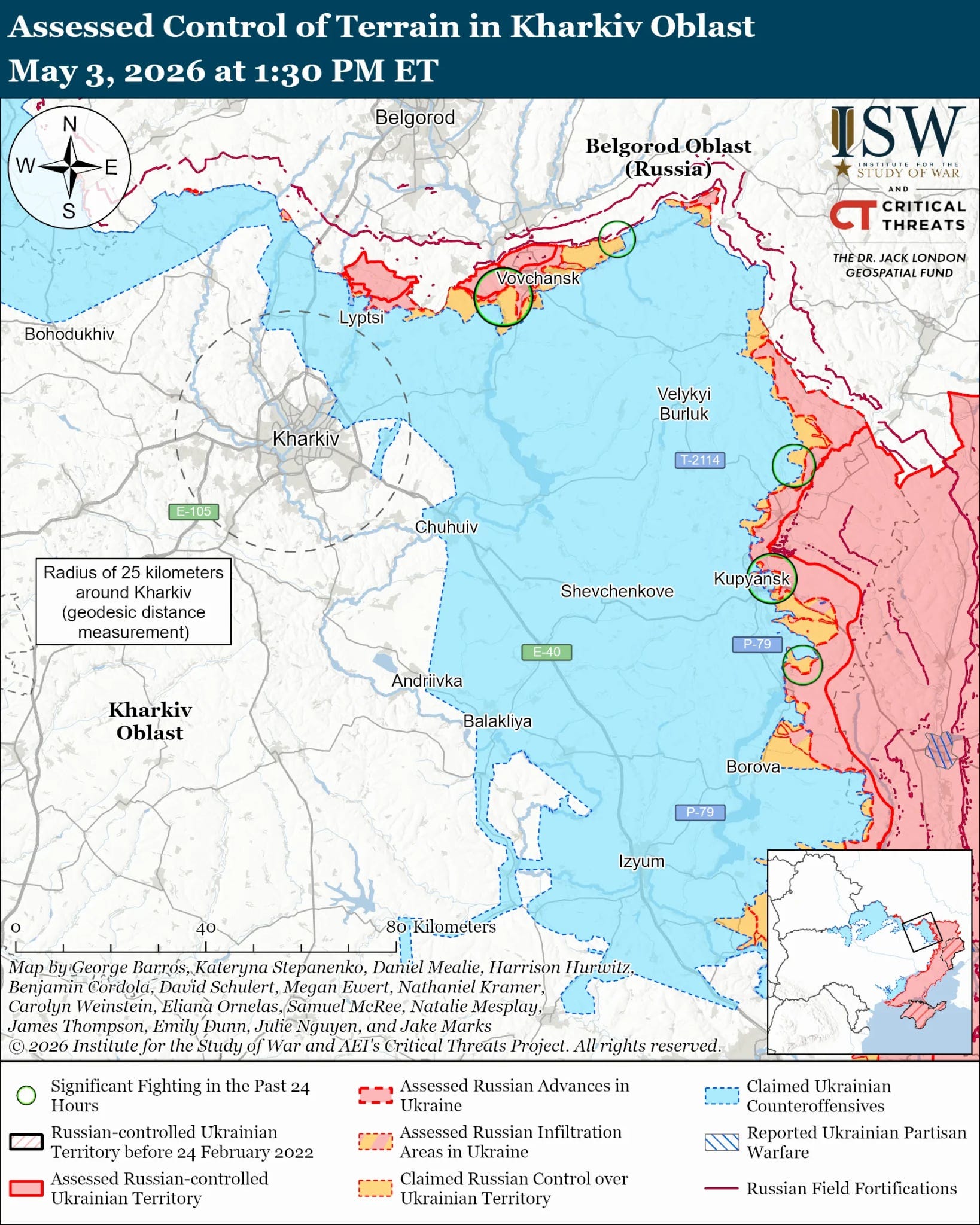
(This is the current map of the area. Our stabilization point was roughly midway between Velyki Berluk and Vovchansk, although the Russians have repeatedly blown the bridges over the Severski Donets River, making our commute there from Kharkiv a three hour ordeal, much of it over very bad roads. )
I think this is a good time to briefly digress into the situation in the International Legion at this point. Officially, we had been disbanded on the 1st of January. Belatedly, the army realized that this sounded bad, and have been conducting a P.R. campaign trying to reframe our having been disbanded as ‘restructuring’, but the language they themselves used from October when we first learned about it until the end of last year when they had forced almost everyone into assault regiments, often as infantry (regardless of previous specialty), was of us being disbanded. Given that the reality of the situation was that more than half of the foreign volunteers promptly quit rather than being forced into shitty, corrupt, Territorial Defense assault regiments and expended in more pointless meat wave attacks, particularly specialists like trained, experienced mortarmen, and that most of the rest of us had to turn in all of our equipment and have since spent months just sitting around a rear area base doing nothing at all despite being nominally absorbed into two different assault regiments, I still think describing the International Legion as having been disbanded is accurate, particularly since we lost our specialized headquarters, set up to handle all the logistical and paperwork difficulties encountered by foreigners operating in Ukraine, and the cadre of interpreters there.
The above was the fate of the 1st, 3rd, and most of the 2nd Battalion of the International Legion. Initially, about a third of the 2nd Battalion remained on the Vovchansk front, still attached to the 113th Territorial Defense Regiment. This was on the strength of two things; our drone units were intact, well equipped, and well regarded, and our medical service was top notch, recognized as such, and functioning as an integral part of the medical services on this front, which were otherwise short-handed. This led the 16th Corps to go to bat for us and get us to remain behind as detachment of the 253rd Territorial Assault Regiment *spits* on paper, but functionally, nothing changed for us operationally, as we continued fighting from the same positions, attached to the same units, we just lost a lot of support, both administratively, from losing the Legion’s headquarters, and logistically, to the point that we found ourselves having to buy our own gas, while trying to hide our vehicles from the 253rd, who are trying to steal them from us while we are still fighting on the front.
These were the conditions we found ourselves operating under at the beginning of this year. I will go into much more detail about that in the book, and in some posts here, but the current story is about our being blown up by a Shahed, thanks to the typical incompetence and rigidity in this army, here on display courtesy of the head of the 113th Regiment’s medical service.
We got ourselves and our personal gear displaced with alacrity, leaving behind our medical equipment, but preserving the most important thing, ourselves, trained medical personnel with years of experience at the front. The border guards welcomed us into their home and had beds for all of us, apparently the beds of people that were there only part of the time, but at least we weren’t sleeping on the floor. If anything, they welcomed us too warmly. Drinking isn’t uncommon in this army, our unit was remarkably dry, but we occasionally found ourselves sharing quarters with personnel from other units who did not maintain the same level of professionalism as we did, and this was another one of those occasions. All of us struggled to get sleep that night, between one soldier in particular alternating between trying to chat all of us up and carrying on loud telephone conversations on speaker phone while wandering throughout the entire house, through the rooms we were all trying to sleep in. This went on all night.
Nothing like having an enthusiastic drunk excitedly trying to communicate with you because you are an American, by using ChatGPT. I have had the misfortune to experience virtually every translation app available in my three years here in Ukraine, and even taking into account that the user was drunk, I have to say that hands down, ChatGPT was the worst of any of the translation apps, by far. I refrained from using either of the two I had on my phone, because I didn’t want to facilitate the inane conversation, I wanted to go to sleep, and so did everyone around us who was trying to sleep through this guys antics. I was counting on him getting frustrated with the futility of trying to communicate through ChatGPTs translation “function” (seriously, I don’t think it succeeded in even getting a single simple sentence correct), and eventually giving up on attempting to chat me up. Unfortunately, he had that dogged determination and narrow focus that drunks sometimes have, and it not only took a while for him to give up on it, he returned several times throughout the night to try again.
So, the next morning when we received the news that the border guards headquarters had found a new place for us to set up our stabilization point, we were pleased. None of us were looking forward to trying to get another night of sleep with the handful of border guards we had bunked down with the night before, and in particular, their alcohol enthusiast. We were informed that they’d be sending a truck to help us move the exam tables, our bunks, and other the other accoutrement of the stabilization point to the new location, so they directed us back to our current stabilization point to begin packing.
Somehow, we all knew it couldn’t possibly go as smoothly as that, and that it wasn’t going to work out, and so we all took a very lackadaisical approach to packing up. We procrastinated on breaking down the bunks until after we had boxed up our medical supplies. By the time we had disassembled all the bunks in the room I was staying in, many hours had passed, and we were running out of daylight, and we still hadn’t heard any more about a truck coming to help us move, or where it was we were going to move to. The composition of our individual rotation teams varies from month to month as people go on leave or the other tides shift personnel about, and usually we’d all stay in one room to conserve warmth, but I was back with my favorite team, and Vlada and Oleksii are a married couple and so I told them they should have a room to themselves, so I was alone in another room of the house, the one we had just finished breaking down all of the bunk beds in when a couple of Ukrainian soldiers show up.
As so often happens in my experiences in this army, a lengthy conversation happens in Ukrainian between the new arrivals and my team, and I understand maybe a word here or there. I have been successful in my goal of remaining a private though, so I just sit it out and wait to be informed afterwards of what is going on, but it seems obvious that things aren’t going to plan.
After they depart, I ask; “So, lemme guess, no truck is coming to take away all this gear we just packed up”? It gets better. Sooo, they did find us a place to relocate to, but “it needs some work” and it is going to take “two or three days” to be ready for us. Sooo, we just packed up all our gear for nothing. Classic army ‘hurry up and wait”. We had received orders to begin packing up immediately and be ready to go, and now we were packed, and…we weren’t going anywhere. We thought we had an ace up our sleeve though. We had actually rented an apartment in an big Soviet apartment block in this village a few months back, and had a six month lease on it, and were still paying for it. We had moved out of it because the building was getting hit by drones, but at this point, the off chance it’d get hit by drones on the few nights we needed to be there while waiting for the new stabilization point to be made habitable and functional seemed like a wiser risk than staying at the stabilization point that we had specifically been told had been identified and targeted, and had specific intel that it was going to be hit. I was pretty sure the only reason it didn’t get hit the night before was because we had vacated it and without us heating the building and the heat signatures of our bodies inside, the Russians targeted something else instead that night.
So, we put in a call to the landlord of the apartment we had rented a few months before. The building had been largely abandoned after taking some hits, and so she said hold on, I’ll go check the apartment before you head over there with all your things. At this point, we were feeling kind of lucky to have a back-up place to go to, and were thinking everything was going to be okay, we’d just have a couple of risky days of commuting across the village to the stabilization point any time we got word that patients had shown up there. Which, luckily, given the ebb and flow of war at this point, wasn’t super frequent.
Alas, we finally hear back from the landlord of the apartment a couple of hours later. Our apartment was on the top floor, and the roof had been damaged in the attacks. There was several inches of frozen water on the floor. So much for that option.
At this point we had a discussion about returning to the border guards house to spend the night there, but it turned out that the medical director of the 113th had ordered us to stay at our stabilization point, despite us having received good, solid intelligence that it was going to be hit. Very specific intelligence, telling us we’d be targeted by Shaheds.
We argued with her that the neighboring stabilization points could pick up our patients for a few days, and she refused. Since the Shaheds mostly come at night, especially up until this point in the war, we asked to at least sleep elsewhere and just come in to the stabilization point when patients showed up, and she refused that as well. She said patients just showed up without notifying us that they were coming, so we needed to be there at all times. We argued that we could use the forms of communication available to us to put out the word to everyone that we would not be there 24/7 and we would need to be contacted in advance to be present if anyone was bringing patients to us, and she refused this reasonable option as well and ordered us to remain at the location she knew full well was being targeted.
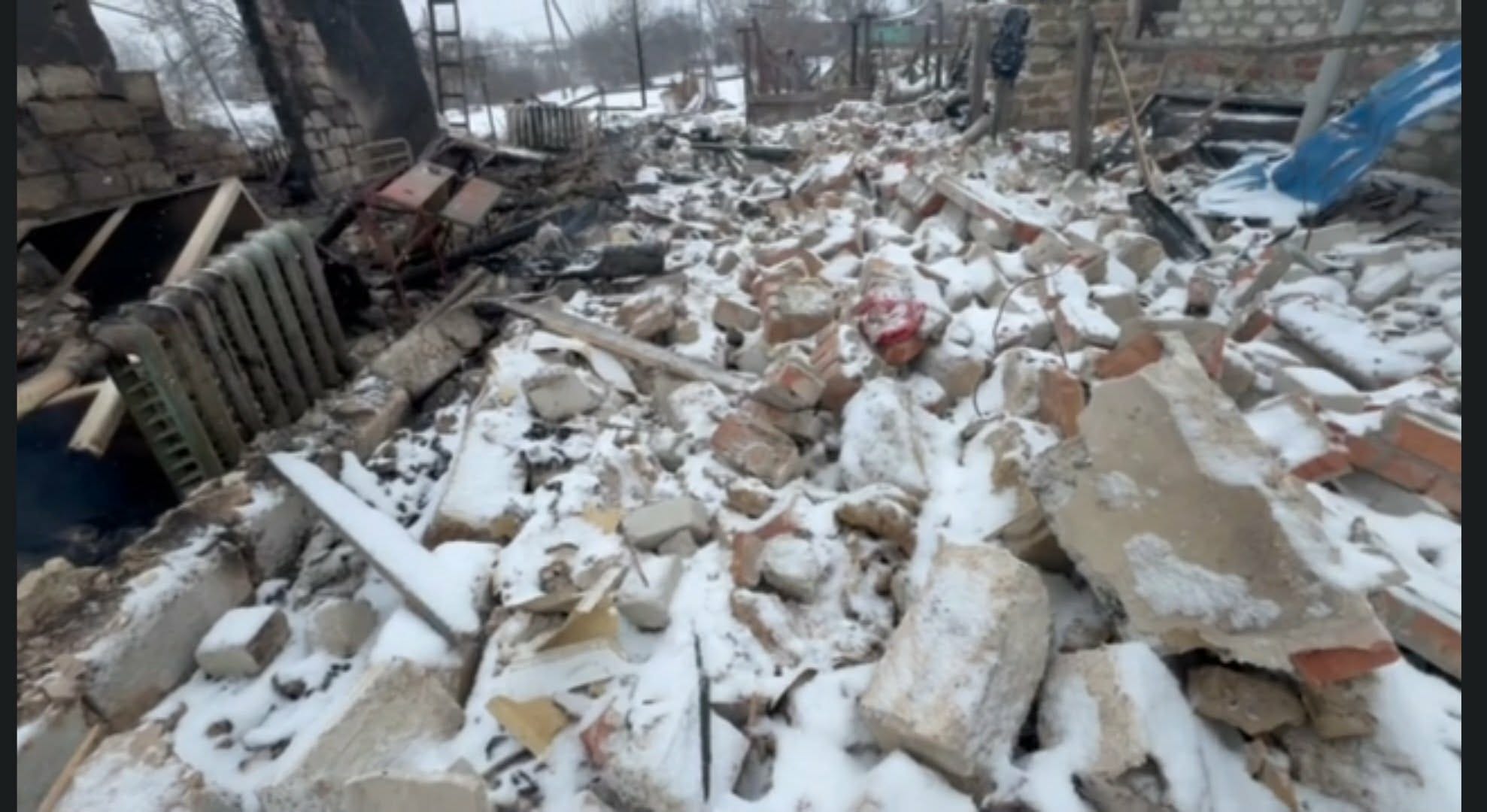
Still from the walk around video Glenna did the morning after the attack.
This seems like a good place to break this off as this instalment of this story.
.